

Henry David Thoreau once wrote that most people live lives of quiet desperation — rushing past the things that matter most. He didn't write that about weeds, but he could have.
Every spring, millions of homeowners stare at a lawn full of dandelions and creeping thistle and feel that same quiet dread. They reach for the chemical spray they feel vaguely guilty about. They crouch down with a trowel and spend forty minutes getting one square foot done. Or they just ignore it and tell themselves they'll deal with it next weekend.
At Walden Backyards, we were built on a different idea — one Thoreau would recognize. Slow down. Step outside. Do the thing deliberately, with the right tool, and actually enjoy it.
That's exactly what The Weed Hound™ was designed to make possible.
This spring, we're going to show you how to get your lawn genuinely ready for the season you've been waiting for — and how to do it standing upright, without chemicals, without a sore back, and without spending your whole Saturday on your knees in the dirt.
Why Spring Weed Removal Actually Matters
It's tempting to think of weeds as a cosmetic problem — a nuisance that makes your lawn look a little rough around the edges. But weeds are actually aggressive competitors. Dandelions, clover, thistle, and crabgrass don't just take up space. They pull nutrients, water, and light away from your grass before it even has a chance to establish itself for the growing season.
Spring is the most important window for weed control. Here's why:
-
Weeds are young and shallow-rooted in early spring, making them far easier to pull completely.
-
Getting ahead of weeds before they flower and go to seed prevents the next generation — a single dandelion can produce up to 200 seeds.
-
Grass is starting to grow in spring, and clearing weeds gives it room to spread and thicken naturally.
-
Chemical treatments applied in spring can damage emerging grass and leach into soil before your plants are established.
The math is simple: one hour of weed removal in April saves you five hours in July.
The Weed Hound™: Your Secret Weapon for Spring
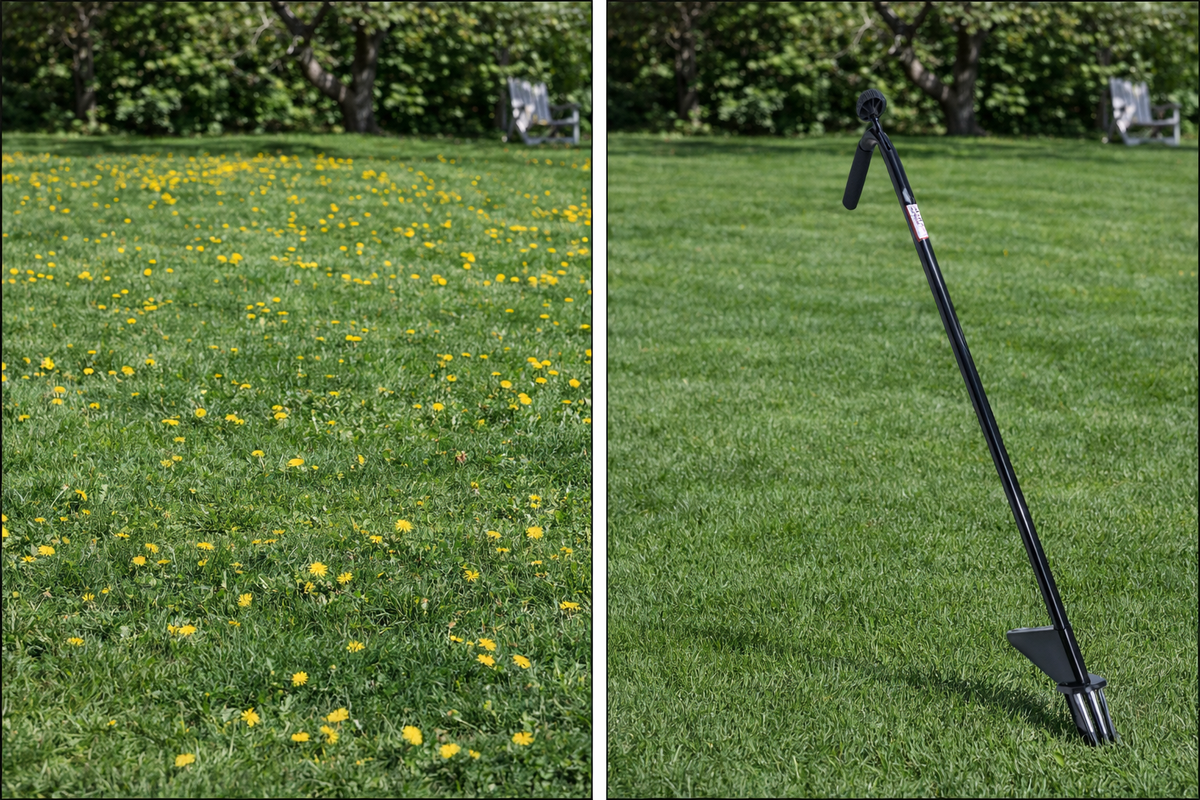
The Weed Hound™ is an upright weed pulling tool engineered for exactly this kind of work. No bending. No chemicals. No kneeling in wet morning grass.
Here's how it works: you step on the foot pedal to drive six hardened steel tines into the soil around the weed's root. You pull up the handle to extract the weed — root and all. Then you press the release knob to eject it. That's it. One fluid motion, from standing height, and the weed is gone.
Experienced users report pulling over 100 weeds in 15 minutes. That's not a marketing claim — it's the natural rhythm of the tool once you find your pace. Step, pull, release. Step, pull, release. It becomes almost meditative.
Which, come to think of it, is exactly what Thoreau was after.
"I went to the woods because I wished to live deliberately… and not, when I came to die, discover that I had not lived."
You don't have to go to the woods. You just have to go to the backyard. And you might as well enjoy it while you're there.
A Room-by-Room Spring Lawn Prep Guide
Getting your lawn and yard truly ready for spring isn't just about weeding — it's about working through the space systematically so nothing gets overlooked. Think of it as a walk-through of your outdoor home.
1. The Front Lawn — First Impressions Count
Start here because it's the most visible and often the most weed-dense after a long winter. Focus on dandelions first — they'll be the most prominent and the easiest to spot. Work in rows from one side to the other so you don't lose track of where you've been.
The Weed Hound excels in open lawn areas like this, where you can cover ground quickly. Use the full range of motion and let the tool do the work — don't force it. Let the tines do the gripping.
Pro tip: Tackle this section in the morning after a light rain. Moist soil lets the tines penetrate deeper and pull more of the root system intact.
2. Garden Beds and Borders — Precision Work
Garden beds require more careful attention because you're working around plants you want to keep. The Weed Hound's narrow tine configuration makes it precise enough for most bed edges and pathways between plants.
For tight spots between perennials or along fencing, you may need a traditional hand weeder for individual stubborn intruders. But for the open sections of a bed, the Weed Hound dramatically speeds up the work.
This is also a good time to add a fresh layer of mulch after weeding — 2–3 inches will suppress new growth and retain moisture as temperatures rise.
3. Along Walkways, Driveways, and Edging
Weeds that creep along concrete edges and pavers are among the most persistent. They're also highly visible. Use the Weed Hound along the edge of your driveway and walkways, then consider a dedicated edging tool or string trimmer to clean up the border itself.
A clean edge makes the entire lawn look more intentional — even if the middle isn't perfect yet.
4. The Backyard — Your Sanctuary
This is where Walden's whole philosophy comes to life. The backyard is where you gather, where the fire goes, where the kids play and the dogs run. Getting it clean and ready for summer isn't just about maintenance — it's about setting the stage for the moments that matter.
Work through the grass methodically, but also pay attention to the areas around your fire pit, patio furniture, and any garden zones. Remove any dead vegetation from winter. Rake out any matted grass that didn't survive the cold. Aerate if the soil feels compacted.
Then stand back and take a look. A clean backyard in late April is one of the genuinely satisfying things in life.
5. Don't Forget the Edges of Your Property
Fence lines and property borders are where weeds establish and spread into the rest of your lawn. A pass along all your fence lines with the Weed Hound early in the season can prevent a lot of mid-summer frustration.
How to Use The Weed Hound Effectively: Tips for Best Results
-
Work after rain or watering — moist soil makes root extraction dramatically more effective.
-
Position the tines directly over the crown of the weed for the best grip.
-
Pull straight up rather than at an angle to extract as much of the taproot as possible.
-
Collect weeds in a bucket as you go so you're not tracking them back onto the lawn.
-
Don't rush — the tool's rhythm is efficient enough that patience actually makes you faster.
-
Tackle the same area once more about 2 weeks later to catch any late-emerging weeds you missed.
Going Chemical-Free: Why It Matters More Than You Think
Herbicides are convenient, but they come with real costs. They kill indiscriminately, damaging beneficial soil organisms and nearby plants. They can wash into groundwater and storm drains. And many have long-term soil health implications that make future growing harder, not easier.
Mechanical weed removal — pulling weeds by the root — is the gold standard for lawn health. You remove the weed without leaving any chemical residue, without harming the surrounding grass, and without disrupting the soil biology that makes your lawn thrive.
That's not just better for your yard. It's better for your neighborhood, your watershed, and your kids and pets who roll around in the grass all summer.
It's also just more satisfying. There's something deeply right about solving a problem with your hands — or in this case, your foot.
Making Spring Prep a Ritual, Not a Chore
Here's the reframe Thoreau would appreciate: spring lawn care doesn't have to feel like maintenance. It can feel like intentional time outside. A morning with your hands in the work, a podcast or a playlist in your ears, the air still cool enough to be comfortable.
Get outside early, before the day gets away from you. Bring a thermos of coffee. Work methodically through one section of the yard at a time. Notice what's coming up — the first tulip tips, the grass filling in where it was thin last fall.
This is what backyarding is actually about. Not just the fire pits and the cornhole sets and the outdoor kitchens — though those are great too. It's about actually being out there, present in your own space, making it yours.
The Weed Hound just makes it easier to do that without destroying your back.
The Weed Hound vs. Other Approaches: A Realistic Comparison
vs. Chemical Herbicides
Chemicals work, but they're non-selective, require protective gear, take days to show results, and leave residue. The Weed Hound gives you immediate, visible results with zero chemical exposure.
vs. Hand Pulling
Hand pulling is effective but physically brutal — you rarely get the full root, and you'll pay for it in your back and knees. The Weed Hound extracts the whole root from a standing position, every time.
vs. Standard Weed Pullers
Basic step-weeders exist, but The Weed Hound's six-tine grip system, ergonomic design, and one-press ejection mechanism make it meaningfully faster and more effective than generic alternatives. It's built to last and designed by people who actually use it.
Ready to Reclaim Your Lawn?
Spring only comes once. The window for effective, easy weed removal is short — weeds get harder to pull as they establish through the season, and once they flower and seed, you're fighting next year's problem too.
The Weed Hound is in stock now, and we've made it even easier to get yours before the season peaks. Use code WEEDHOUND2026 at checkout to save 10%.
Then take Thoreau's advice. Step outside. Do the work deliberately. Enjoy the result.
Your best backyarding starts with the best lawn to do it in.
Leave a comment
This site is protected by hCaptcha and the hCaptcha Privacy Policy and Terms of Service apply.